Find clear answers about Gutermann thread types, approximate thickness in millimetres, thread sizes, machine compatibility, fabric uses and choosing the right thread for your next sewing project.
⌕
Showing all 100 FAQs
No FAQs matched your search. Try a broader term such as “thread”, “denim”, “Sew-All”, “Mara” or “needle”.
Yes. Gutermann is known for smooth, consistent thread that feeds well through sewing machines and helps reduce breakage, uneven stitching and lint build-up.
Many sewists like Gutermann because it is reliable, widely available, comes in a large colour range and performs well across many everyday sewing projects.
Yes. Gutermann Sew-All is a practical choice for beginners because it suits many common fabrics and is easy to use in most domestic sewing machines.
Yes. Gutermann offers both retail and industrial thread lines, including Mara, Tera and Terabond, which are used for professional garment, upholstery and technical sewing applications.
Yes. Gutermann makes polyester thread options including Sew-All, Mara, Tera, Extra Strong and several specialist threads for heavy-duty, outdoor and stretch sewing.
Yes. Gutermann cotton threads are commonly used for quilting, natural fibre projects and sewing where a cotton finish is preferred.
Polyester is usually stronger and more flexible, making it useful for everyday sewing. Cotton is often chosen for quilting and natural fibre projects. The best option depends on the fabric and purpose.
Quality polyester thread generally has good colour retention, but long-term sunlight and harsh washing conditions may gradually affect colour over time.
Gutermann Thread Thickness & Size Comparison
Gutermann thread sizes may use systems such as ticket number, Tex or thread weight. These systems help compare thickness, strength and ideal fabric use.
Tex measures the weight of 1,000 metres of thread in grams. A higher Tex number generally means a thicker, heavier thread.
Thicker thread can add strength and make stitches more visible. It is useful for denim, bags, upholstery, repairs and decorative top stitching.
Thicker thread is often stronger, but material and construction matter too. For example, polyester and bonded polyester threads are usually better for high-stress or outdoor applications.
Gutermann Sew-All, often compared with Mara 100, is one of the best all-round choices for repairs, clothing, craft work and beginner sewing.
Use this as a practical guide. The millimetre thicknesses below are approximate because thread diameter can vary depending on fibre, twist and finish.
Simple rule: 0.10–0.15 mm suits delicate fabrics, 0.15–0.20 mm suits everyday sewing, 0.20–0.30 mm suits heavier fabrics, and 0.30 mm+ suits decorative or high-strength work.
For denim, consider Mara 50, Extra Strong, Top Stitch Thread or Mara 30. Approximate thickness usually ranges from 0.25–0.45 mm depending on whether you need structural strength or visible top stitching.
For upholstery, heavier options such as Mara 50, Tera 40, Extra Strong or Terabond are commonly used. Approximate thickness may range from 0.28–0.60+ mm depending on the fabric and stress level.
Mara 150, Mara 180 or Mara 220 are useful for delicate fabrics. These are finer threads, generally around 0.08–0.12 mm, and help reduce bulky seams on light materials.
Sewing Machine Questions
Most domestic and industrial sewing machines can use Gutermann thread. The key is matching the thread thickness to the correct needle size and fabric.
Thread breakage can happen from a blunt needle, incorrect tension, poor threading, rough needle plates or using a thread that is too thick for the needle.
Yes, but use an appropriate overlocking thread where possible. Standard Sew-All can work for some tasks, but overlocker cones are usually more practical for frequent use.
Skipped stitches often come from using the wrong needle type, a worn needle, incorrect tension or mismatching heavy thread with a small needle.
Bunching underneath the fabric is usually caused by incorrect upper threading, tension problems or the presser foot not being lowered before sewing.
Yes. Older machines can use Gutermann thread as long as the machine is clean, properly threaded and adjusted for the thread and fabric.
Sometimes. Heavy threads can require tension adjustments, a larger needle and slower sewing speed to prevent breakage or uneven stitches.
Yes, but choose embroidery-specific Gutermann thread when doing decorative embroidery. Standard sewing thread is better kept for seams and repairs.
Shredding can be caused by a damaged needle, tight tension, poor thread path, burrs in the machine or a needle eye that is too small for the thread.
Fabric & Project Questions
For bags, Mara 70, Tera 60 or Extra Strong are good options because they offer more seam strength than standard all-purpose thread.
Gutermann cotton quilting thread is a popular option for quilting. Some quilters also use Sew-All depending on the project and desired finish.
Fine options such as Mara 150 or another lightweight thread are better for silk and delicate fabrics because they reduce seam bulk.
For canvas, consider Mara 70, Mara 50, Tera 60 or Tera 40 depending on the weight of the canvas and how much stress the seam will take.
For swimwear and stretch fabrics, Maraflex is a helpful choice because it is designed to stretch with the seam.
Yes, heavier Gutermann threads such as Mara 30, Tera 40 or strong polyester options may suit some leather projects. Always test first and use a leather needle.
Most Gutermann polyester threads have good colour retention, but care instructions should always follow the fabric and finished item.
Many polyester threads can handle regular washing, but hot washing should depend on the fabric care label and thread type.
Polyester thread generally has low shrinkage, which makes it useful for garments and items that are washed often.
Cotton thread may shrink slightly, especially with heat and washing. This can be desirable for some quilting projects but should be considered before sewing.
Some Gutermann threads are better suited to UV exposure than others. For outdoor and marine projects, Terabond is commonly preferred because it is made for demanding outdoor use.
For outdoor use, look at stronger polyester or bonded polyester options such as Tera or Terabond. These are better suited to sun, weather and abrasion than standard sewing thread.
Yes. Long-term moisture and humidity can weaken thread or encourage mould in storage areas. Keep thread dry and covered.
Store thread away from direct sunlight, moisture, dust and extreme heat. A closed storage box or drawer is ideal.
Yes. Any thread can weaken over time, especially if stored in sunlight, heat or damp conditions. Test older thread before using it on important projects.
When stored properly, thread can last for many years. If it snaps easily, feels brittle or looks faded, replace it.
Buying Gutermann Thread
You can buy Gutermann thread from Australian sewing and textile suppliers. You can also browse Gutermann Thread online for colours, sizes and specialist options.
Larger reels often work out cheaper per metre, especially if you sew often or use common colours such as black, white, navy or grey.
Thread sets are useful for beginners because they provide a range of colours without needing to choose every spool individually.
Black, white, cream, grey and navy are practical starting colours. From there, add shades that match the fabrics you use most.
Gutermann can cost more than budget thread, but many sewists find the smoother performance and durability worth it.
An exact match is ideal for visible seams, but a close match is usually enough for most sewing. Slightly darker thread often blends better than lighter thread.
Yes. Slightly darker thread often blends nicely into seams and can look more natural than a lighter shade.
Most home sewists can start with a few neutrals and add colours as projects come up. If you sew professionally, a wider colour range is more helpful.
Gutermann Sew-All is one of the most commonly used options because it handles many everyday sewing tasks.
Troubleshooting Gutermann Thread
Seam puckering may be caused by tight tension, the wrong needle, fabric stretching or thread that is too heavy for the material.
Uneven stitches can come from inconsistent tension, an old needle, poor threading or fabric feeding unevenly through the machine.
Thread knotting can happen when the machine is threaded incorrectly, the needle is damaged or the thread is not feeding smoothly from the spool.
If bobbin thread is visible on top, the upper tension may be too tight or the bobbin tension may need checking.
Loops are often caused by threading issues, incorrect tension or sewing with the presser foot raised.
Loose stitching usually means the tension is too low, the machine is misthreaded or the needle and thread are not matched correctly.
Replace needles every few projects, or sooner if you hear popping, see skipped stitches or notice thread damage.
Fraying is commonly caused by a rough needle eye, incorrect needle size, tight tension or friction inside the machine.
Yes. Low-quality thread may create more lint, break more often and produce less consistent stitches.
Yes. Good thread helps improve seam strength, stitch quality and machine performance.
Advanced Thread Questions
Gutermann Top Stitch Thread is a thicker decorative thread used when you want visible stitching, such as on jeans, jackets, bags and feature seams.
Invisible thread is a clear thread used when you want stitches to be hard to see, often in quilting, appliqué and decorative work.
Upholstery thread is stronger thread made for seams that take more stress, such as furniture, cushions, covers and canvas work.
Overlocker thread is designed for sergers and overlock machines. It is usually supplied on larger cones for continuous sewing.
Embroidery thread is designed for decorative stitching and machine embroidery. It is usually chosen for sheen, colour and stitch appearance rather than seam strength.
Usually, embroidery thread is not the best choice for structural seams. Use Sew-All, Mara, Tera or Extra Strong for seams that need durability.
Some decorative threads can be used for regular sewing, but many are better suited to visible stitching rather than high-stress seams.
For outdoor fabrics, consider Tera or Terabond options because they are stronger and better suited to abrasion and exposure than general sewing thread.
A neutral Gutermann Sew-All spool in black, white, grey or navy is useful in almost every sewing kit.
Match the thread to the fabric weight, seam purpose, stitch visibility, needle size and whether the item needs stretch, strength or weather resistance.
Yes. Thread thickness, colour and finish all affect how visible the seam looks and how flat or decorative the stitching appears.
More Gutermann Thread FAQs
Gutermann Sew-All covers many projects, but you will still need specialist threads for stretch fabrics, denim top stitching, upholstery, outdoor gear and very delicate fabrics.
Yes. Gutermann industrial ranges such as Mara, Tera and Terabond are commonly used in commercial and technical sewing.
Thread does not expire like food, but it can weaken over time. If it snaps easily or feels brittle, replace it.
Yes. Fine thread needs a smaller needle, while thicker thread needs a larger eye so it can pass smoothly without shredding.
Yes. Moving from fine thread to heavy thread can require tension adjustments, needle changes and sometimes a slower sewing speed.
It can be. Thicker thread needs the right needle, suitable fabric and correct machine settings. Lightweight domestic machines may struggle with very heavy thread.
Welcome to our website. If you continue to browse and use this website, you are agreeing to comply with and be bound by the following terms and conditions of use, which together with our privacy policy govern Vardhman A&E Threads’s relationship with you in relation to this website. If you disagree with any part of these terms and conditions, please do not use our website.
The term ‘Vardhman A&E Threads’ or ‘us’ or ‘we’ refers to the owner of the website whose registered office is . Our ABN is 57 137 336 326. The term ‘you’ refers to the user or viewer of our website.
The use of this website is subject to the following terms of use:
The content of the pages of this website is for your general information and use only. It is subject to change without notice.
Neither we nor any third parties provide any warranty or guarantee as to the accuracy, timeliness, performance, completeness or suitability of the information and materials found or offered on this website for any particular purpose. You acknowledge that such information and materials may contain inaccuracies or errors and we expressly exclude liability for any such inaccuracies or errors to the fullest extent permitted by law.
Your use of any information or materials on this website is entirely at your own risk, for which we shall not be liable. It shall be your own responsibility to ensure that any products, services or information available through this website meet your specific requirements.
This website contains material which is owned by or licensed to us. This material includes, but is not limited to, the design, layout, look, appearance and graphics. Reproduction is prohibited other than in accordance with the copyright notice, which forms part of these terms and conditions.
All trademarks reproduced in this website, which are not the property of, or licensed to the operator, are acknowledged on the website.
Unauthorised use of this website may give rise to a claim for damages and/or be a criminal offence.
From time to time, this website may also include links to other websites. These links are provided for your convenience to provide further information. They do not signify that we endorse the website(s). We have no responsibility for the content of the linked website(s).
Your use of this website and any dispute arising out of such use of the website is subject to the laws of Australia.
Privacy Policy
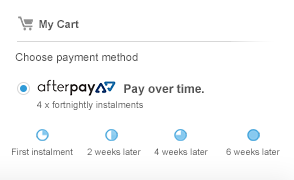
Shop Now. Pay Later. 100% Interest-free.
Simple instalment plans available instantly at checkout
Select Afterpay as your payment method
Use your existing debit or credit card
Complete your checkout in seconds
No long forms, instant approval online
Pay over 4 equal instalments
Pay fortnightly, enjoy your purchase straight away!
All your need is:
1) An Australian Visa or Mastercard debit/credit card; 2) To be over 18 years of age; 3) To live in Australia